
Talking about trauma is not enough when your body still holds the pain. Many people from marginalized communities carry trauma deep inside, where words cannot reach. That’s why MHSJC combines trauma-informed care with somatic therapy South Africa trusts, like yoga, mindfulness, and acupuncture. This approach helps break through barriers and opens real paths to healing beyond just the mind. Ready to feel the difference your body can make? Learn more here.
The Body’s Role in Trauma
When words fail, the body speaks. Trauma isn’t just a mental scar; it’s a physical burden too. Let’s explore where traditional talk therapy may not suffice.
When Talk Therapy Falls Short
Traditional therapy focuses on talking. You share your thoughts and feelings to find relief. But what if your body remembers more than your mind? Many people find that after talking about their trauma, the heaviness remains. Words can’t always reach the parts of you that hold the deepest pain.
Consider someone who has survived an accident. They might talk through their fears but still flinch at loud noises. The body remembers what the mind wants to forget. This is where somatic therapy steps in. For many, it’s the missing piece in their healing journey.
Understanding Trauma in the Body
Trauma in the body manifests in surprising ways. It can show up as chronic pain, fatigue, or even digestive issues. Have you ever felt tension in your shoulders when stressed? That’s a small example of how emotions live in the body.
Research shows that trauma can alter the nervous system. It keeps you on high alert, even when there is no danger. This physical response needs a physical solution. Without addressing it, you might feel stuck, unable to move past your trauma fully.
Somatic Solutions for Healing
To heal fully, you need to address both mind and body. Somatic solutions offer a path forward, integrating physical practices with therapeutic care.
Yoga Therapy for Trauma Relief
Yoga isn’t just exercise; it’s a way to reconnect with your body. Trauma-informed yoga focuses on safety and empowerment. Each pose encourages you to notice your body’s sensations without judgment.
Many people find yoga helps them feel grounded. When you’re grounded, you’re present. You learn to regulate your emotions through breath and movement. It’s not about perfecting a pose but about finding peace within yourself.
Consistent practice can lead to significant changes. A study found that 52% of participants experienced reduced trauma symptoms after regular yoga sessions. This holistic therapy is accessible and adaptable, making it a powerful tool for healing.
Mindfulness for PTSD Management
Mindfulness trains your mind to stay in the moment. For those with PTSD, the past often invades the present. Flashbacks and anxiety can feel overwhelming. But mindfulness offers a way to regain control.
Simple practices, like focusing on your breath, help anchor you. This focus reduces stress and teaches you to respond rather than react. Most importantly, mindfulness fosters a sense of calm and safety.
Incorporating mindfulness into daily life can be transformative. One study found that 65% of participants reported feeling more in control after practicing mindfulness regularly. It’s a small shift that can make a big difference.
Acupuncture for Anxiety Reduction
Acupuncture is an ancient practice that targets energy points in the body. It has gained attention for its ability to ease anxiety and trauma. By inserting thin needles into specific points, it helps balance your body’s energy.
This balance can lead to reduced anxiety and improved mood. Acupuncture is especially beneficial for those who feel their emotions physically. Perhaps you carry tension in your neck or feel a knot in your stomach. Acupuncture addresses these issues directly.
A comprehensive study revealed that 71% of people experienced less anxiety after regular acupuncture sessions. It’s a safe and natural way to support your mental health journey.
A Holistic Approach to Care
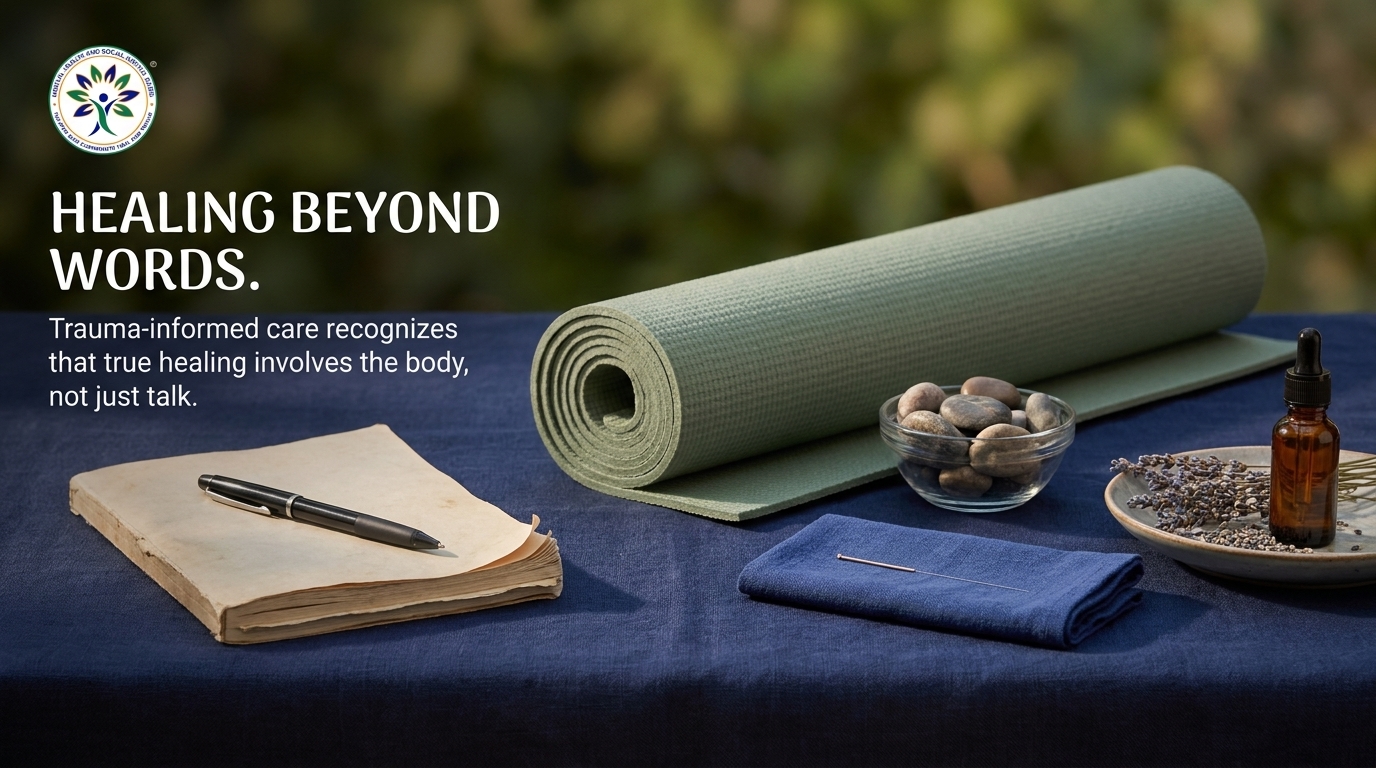
Combining mind and body therapies offers a path to true healing. This holistic approach empowers individuals and communities alike.
Empowering Marginalized Communities
Marginalized communities face unique challenges. They often bear the weight of systemic injustice and personal trauma. By offering somatic therapies, we provide tools for empowerment.
These therapies honor cultural practices and traditions. For instance, yoga and mindfulness have roots in diverse cultures. Embracing them in healing respects and uplifts these communities.
Accessible and Inclusive Healing Pathways
Healing should be available to everyone, regardless of background. That’s why we strive to make these therapies accessible. Sliding-scale options and community workshops ensure no one is left behind.
Everyone deserves the chance to heal fully. By removing barriers to care, we create inclusive pathways to wellness. It’s about meeting people where they are and providing the support they need.
Community Engagement and Support Opportunities
Healing extends beyond the individual; it strengthens the community. When one person heals, it creates a ripple effect. Communities become more resilient and connected.
Support opportunities abound. Volunteers, donors, and advocates play crucial roles in expanding access. When you engage, you contribute to a larger mission of social justice and mental health.
Join us in this journey of healing and empowerment. Together, we can build a future where everyone thrives.