
Communities carry wounds left by systems built to hold them back. Healing alone in that space feels impossible. At MHSJC, collective healing South Africa trusts grows stronger when mental health care meets social justice education, trauma-informed support, and community workshops designed for your reality. This is where shared strength begins—beyond the clinic, rooted in your community’s power to change.
Healing Within Harmful Systems
Communities often feel burdened by the very systems meant to support them. But what does healing look like when mental health care is tailored for marginalized groups?
The Challenge of Marginalized Communities
Many in marginalized communities struggle with accessing proper care. The systems in place often ignore their unique needs. This reality leaves individuals feeling isolated, unsure of where to turn. The numbers tell the story too: over 60% of those in need do not receive adequate mental health support. This gap in care contributes to ongoing cycles of trauma.
Imagine someone who constantly faces societal barriers. It’s not just about individual struggles; it’s about a community striving for change. Most people think healing is solely an individual journey, but community plays a critical role. The longer this collective need goes unmet, the deeper the wounds grow. This is why a community-focused approach is necessary.
MHSJC’s Approach to Real Change
The Mental Health and Social Justice Clinic (MHSJC) recognizes these challenges. Here, the focus is on providing support that meets people where they are. By integrating social justice with mental health care, MHSJC bridges the gap between individual and community needs.
This approach goes beyond traditional methods. It includes trauma-informed care and social justice education. MHSJC seeks not only to heal but to empower. The goal is to equip communities with the tools they need to create lasting change. This model not only addresses symptoms but also roots causes of systemic issues.
MHSJC’s Model in Action
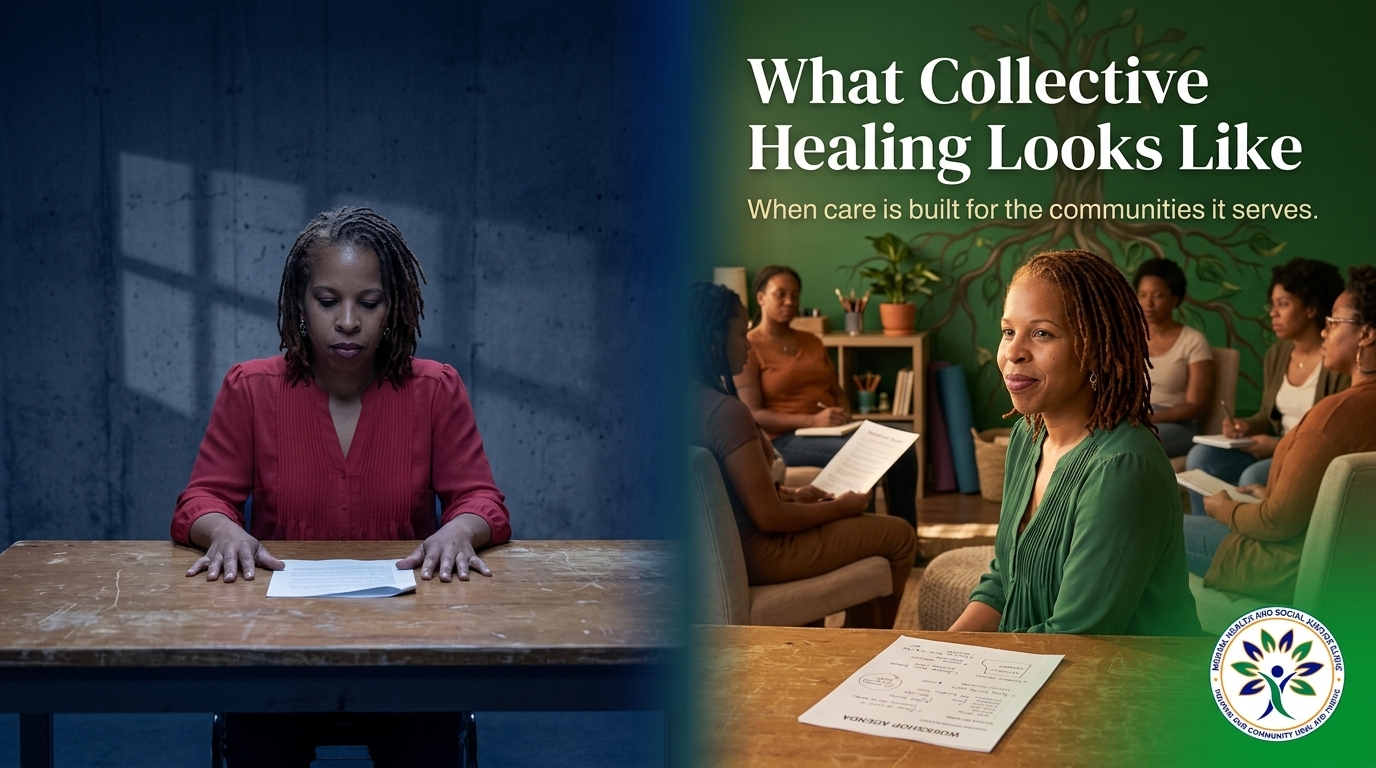
How does MHSJC implement this innovative model? By combining trauma-informed care, social justice education, and community workshops, MHSJC fosters a supportive environment for healing.
Trauma-Informed Care and Support
Trauma-informed care is at the heart of MHSJC’s services. It respects and understands the impact of trauma on individuals. This means you receive care that acknowledges your experiences. Through therapies like yoga and mindfulness, individuals learn to process trauma in a safe space.
A story from our community shows this: a young woman, burdened by past trauma, found peace through yoga therapy. This experience was not just healing for her, but transformative, offering a new perspective on life.
-
Yoga Therapy: Helps manage stress and anxiety
-
Mindfulness Practices: Encourages present-moment awareness
-
Somatic Therapy: Connects mind and body, promoting holistic healing
Social Justice Education and Empowerment
Education is a powerful tool for change. MHSJC offers workshops that teach about social justice and empower individuals. Social justice education is more than information; it’s about understanding one’s rights and how to advocate for them.
Participants learn strategies to challenge injustices they face daily. This knowledge fosters a sense of empowerment. When communities understand their power, they can initiate change. This is not just about individual empowerment, but community resilience.
Community Workshops for Collective Healing
Workshops are a cornerstone of MHSJC’s approach. They provide a space for community members to come together, share experiences, and support each other. These gatherings are where true collective healing begins.
In one workshop, participants discussed systemic barriers and brainstormed solutions. This dialogue opened up new paths for community action. Community workshops are not just meetings; they are hubs of innovation and healing.
-
Trauma Recovery: Strategies for coping and healing
-
Community Wellness: Focused on building stronger communities
-
Art Therapy: Uses creativity to explore and heal emotional wounds
Steps Toward Systemic Change

Ready to take action? Here’s how you can join this movement towards systemic change.
Engage with Justice + Healing Workshops
Participate in workshops that blend justice with healing. These sessions offer a unique opportunity to learn and grow. By joining, you contribute to a larger movement of change. This engagement is crucial for collective healing.
Sponsor Community Access and Outreach
Your support can open doors for those who need it most. Sponsoring access ensures that more individuals benefit from these vital services. Community outreach is about reaching those who are often left behind. It’s a chance to give back and make a meaningful impact.
Participate in Holistic Mental Health Services
Consider exploring holistic mental health services available at MHSJC. From acupuncture to art therapy and cooking therapy, these options are designed to suit diverse needs. They offer alternative ways to achieve well-being and healing.
The path to systemic change is complex but achievable. By participating in these services, you become a part of this transformative journey. Together, we can build a future where communities thrive, no longer held back by harmful systems. This is not just about healing; it’s about creating a lasting impact for generations to come.