

One healing method can’t carry all the weight when trauma, stress, and social challenges collide in your life. If you’ve felt stuck trying to fit your healing into just one lane, you’re not alone. At MHSJC, we blend trauma-informed therapy, somatic care like yoga and acupuncture, community workshops, and social justice support to meet every part of your story. This is why holistic mental health South Africa needs more than a single approach—and why you deserve care that matches your full reality. For more insights, you can read this study on integrating traditional healing and modern mental healthcare in South Africa.
The Myth of One-Size-Fits-All Therapy
You might think one therapy style fits all. But does it?
Unpacking Common Assumptions
Many believe one therapy can fix everything. It sounds simple, but life isn’t simple. Consider someone dealing with trauma. They might think just talking about it is enough. But what happens when emotions get stuck in the body? Traditional therapy might not address that. People often feel pressured to choose a single path. They might worry they’re doing it wrong if they try more than one method. But life, and healing, is rarely one-dimensional. One therapy style might overlook key aspects of your story, leaving gaps in your healing journey.
Realities of Trauma and Social Pressure
Trauma isn’t just a mental issue. It’s physical and social too. Imagine carrying a heavy backpack. Trauma is like that, but invisible. Now, add social pressures. These could be financial stress or community issues. Together, they weigh you down. Ignoring these layers misses the bigger picture. Trauma-informed therapy in South Africa addresses this by recognizing how connected our mind, body, and social environment are. It’s not just about talking. It’s about feeling and understanding your whole self.
MHSJC’s Integrated Approach
At MHSJC, we believe healing should be as complex as the challenges you face.
Combining Therapy and Somatic Practices
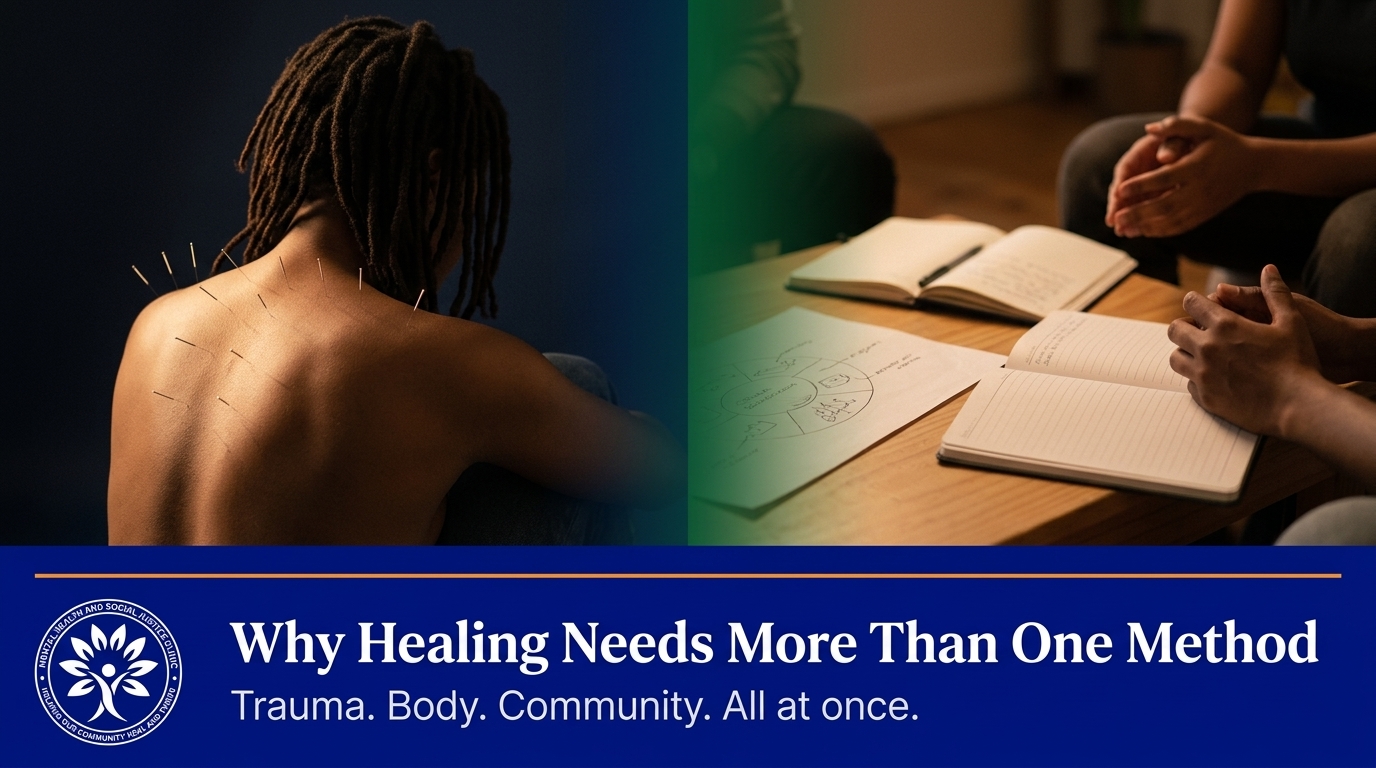
We combine traditional therapy with somatic practices. Why? Because healing isn’t just in the mind. Take yoga for mental health, for instance. It helps release tension stored in the body. Or acupuncture for anxiety: it balances the body’s energy. These methods work in harmony with talk therapy. They offer a rounded approach to health. Studies show that combining these practices can lead to better outcomes. For instance, research reveals how combining therapy with yoga improves mental health.
Role of Community Workshops and Social Justice
Community workshops play a vital role in healing. They offer a space to connect and learn. You aren’t just a participant; you’re part of a movement. These workshops focus on social justice and mental health. They tackle issues like systemic marginalization. By understanding the social factors that affect you, healing becomes more profound. MHSJC empowers you to be an agent of change in your community. This approach not only heals individuals but strengthens communities.
Taking Action for Holistic Healing
Ready to start your journey? Here’s how to take action.
Booking Sessions and Joining Workshops
Getting involved is easy. You can book sessions with our multidisciplinary team. Whether you’re interested in talk therapy, art therapy, or mindfulness practices in South Africa, there’s something for everyone. Workshops offer a chance to dive deeper into community healing South Africa initiatives. They bring people together, fostering a sense of belonging and support.
Supporting Community Through Donations
Your support can make a difference. Donations help us offer accessible mental health care to those who need it most. They fund programs that ensure no one is left behind. By donating, you’re investing in a community where everyone can thrive. Supporting MHSJC means backing a vision of holistic healing that respects and meets diverse needs. Together, we can build a healthier, more just future for all.
In the end, healing is a journey, not a destination. Choosing an integrated path means you’re considering every facet of your life. This approach not only addresses personal healing but also contributes to larger social change. Embrace a fuller model of care today.