

Symptom-only mental health care often leaves you managing pain without fixing what’s really broken. For marginalized communities, this approach misses how trauma, body stress, and social pressures combine to keep wounds open. At MHSJC, holistic mental health South Africa means therapy, somatic practices, and social justice support working side by side. Here, healing happens not just inside you but around you, too—offering real, lasting relief that fits your whole story. For more insights on the benefits of holistic approaches, you can explore this source.
Limits of Symptom-Only Care

When dealing with mental health, focusing only on symptoms might seem like a quick fix. But what if there’s more to the story?
Addressing Only Part of the Problem
Relying just on symptom management can feel like trying to fix leaks without knowing where they’re coming from. While medications might ease anxiety or sadness, they often don’t tackle what’s causing these feelings. For example, someone might experience constant headaches, but the real issue could be stress at work or unresolved trauma. If you only treat the symptom, the root cause remains untouched.
Think of it like a band-aid for a deep wound. It covers the problem, but doesn’t actually help it heal. This is why many people see only temporary relief. The cycle of pain continues because the underlying issues remain. By addressing only part of the problem, the healing is incomplete, and the discomfort lingers.
Overlooking Trauma and Environment
Trauma affects everything. It shapes how you see the world and react to it. Ignoring these deep-seated issues is like ignoring a ticking clock. Eventually, it demands attention. Trauma is not just a memory. It lives in the body, manifesting in unexpected ways. It might show up as a racing heart during stressful meetings or muscle tension that never goes away.
Moreover, your environment plays a significant role in mental health. Living in a community where you’re constantly facing discrimination or lack of resources adds layers to mental strain. When therapy doesn’t consider these elements, it misses the bigger picture. You might start to question the effectiveness of care that overlooks these critical aspects.
Shortcomings of Traditional Models
Traditional models often offer a one-size-fits-all approach. This method assumes that everyone has the same needs and backgrounds. But think about how different individuals’ lives are. One person’s depression might stem from losing a job, while another’s could be rooted in childhood trauma. Using the same treatment for both isn’t just ineffective, it’s also unfair## Limits of Symptom-Only Care
Focusing only on symptoms can leave many underlying issues untouched. This often results in temporary relief rather than long-term healing.
Addressing Only Part of the Problem
When care focuses solely on symptoms, critical aspects of your mental health journey may be missed. You might find temporary relief, but the core issues remain unresolved. This approach fails to consider the complexities of your experiences. It doesn’t account for the layers of stress that contribute to your current state. For example, anxiety might be treated with medication, but the root causes, such as past trauma or ongoing stress, remain unaddressed.
The danger here is that you’re left managing symptoms without true healing. This often leads to frustration and a sense of hopelessness. You deserve care that sees the whole picture, not just the symptoms. A more comprehensive approach can make a real difference in how effectively you heal.
Overlooking Trauma and Environment
Ignoring trauma and environmental factors in mental health care can lead to incomplete treatment. Trauma and the environment you live in can deeply affect your mental well-being. Traditional models often overlook these elements, focusing instead on immediate symptoms. This oversight can be harmful, especially for those from marginalized communities. When trauma isn’t addressed, recovery can feel impossible.
Your environment also plays a crucial role in mental health. High stress from external pressures, like systemic inequality or social discrimination, can’t be ignored. It’s vital for care models to consider these factors. Understanding the broader context of your life leads to more effective support. This is why a holistic approach, which incorporates all these factors, is essential for true, lasting recovery.
Shortcomings of Traditional Models
Traditional mental health care models often miss the mark by not addressing the complete picture. They tend to focus on isolated symptoms instead of considering the complex, interconnected nature of mental health. This approach can leave you feeling unsupported and misunderstood. For instance, treating depression with basic counseling while ignoring cultural or societal pressures can be ineffective.
These models may not provide the comprehensive care needed for lasting change. Their short-term focus can lead to repeated cycles of treatment without genuine progress. You deserve a model that sees you as a whole person, with unique circumstances and challenges. By embracing a more integrated approach, we can move toward healing that lasts and empowers individuals like you to thrive.
The Power of Holistic Healing
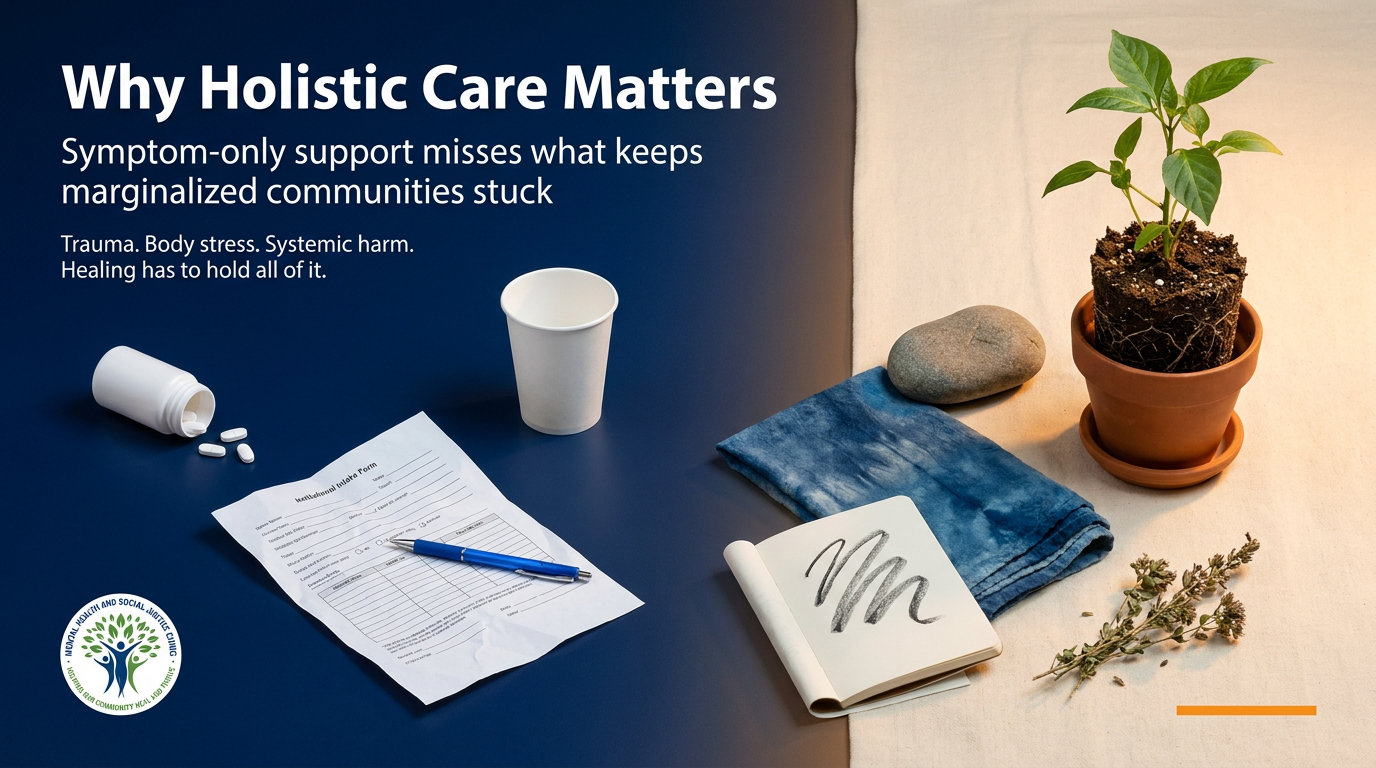
Moving beyond symptom-focused care, holistic healing offers a more comprehensive approach. It integrates various elements of well-being for deeper, more lasting recovery.
Integrating Body and Mind
Holistic mental health approaches combine physical and mental care. This creates a fuller picture of well-being. When you engage in practices like yoga or mindfulness, you’re not just soothing the mind, but also healing the body. Research has shown that integrating body and mind can significantly reduce stress and anxiety. These practices help you become more aware of how your body holds tension or trauma, allowing you to address it more effectively.
By focusing on both the body and mind, you’re better equipped to handle life’s challenges. This integration also opens up new ways to approach trauma recovery. With tools like somatic therapy, you can learn to release stress stored in the body. This means your healing journey isn’t confined to traditional talk therapy. It’s about finding what truly works for you to foster a sense of balance and peace.
Social Justice in Mental Health
Mental health and social justice are deeply intertwined. For many, systemic issues like discrimination and inequality are significant stressors. These challenges must be part of the conversation when addressing mental health. Social justice-focused therapy acknowledges these factors and works to empower you by addressing them directly.
When you feel seen and heard in your struggles, healing can begin. This approach aims to dismantle barriers and provide equitable care. It’s about treating the root causes, not just the symptoms. By integrating social justice principles, mental health care becomes more inclusive and effective. This approach ensures that your unique experiences and challenges are at the forefront of your healing journey.
Lasting Recovery Through Comprehensive Care
True recovery requires a comprehensive approach that considers all aspects of your well-being. By addressing mental, physical, and social factors, you’re set up for long-term success. This means looking beyond immediate symptoms to understand the full context of your life. Holistic care provides the tools and support needed for sustainable healing.
You have the opportunity to experience true transformation when care is comprehensive. This involves continuous support and resources tailored to your needs. By considering every aspect of your life, holistic care can lead to lasting recovery. It’s not just about feeling better today, but building a foundation for a healthier tomorrow.
MHSJC’s Integrated Approach

At MHSJC, we believe in a comprehensive approach to mental health. Our methods are designed to support you fully, embracing every part of your life and experiences.
Trauma-Informed and Culturally Responsive
Our care model starts with understanding trauma and respecting cultural backgrounds. Trauma-informed care ensures that your past experiences are acknowledged and addressed. This approach is sensitive to the impact trauma can have on your mental health. Cultural responsiveness means recognizing and valuing your unique background and how it shapes your experiences. This understanding allows us to provide care that is respectful, effective, and affirming.
For many, traditional models may not feel relevant or accessible. That’s why our approach is different. We tailor our services to meet your specific needs, considering your history and cultural context. This makes our care more inclusive and impactful, empowering you to engage fully in your healing journey.
Somatic Therapy and Community Workshops
We offer somatic therapy to help you connect with your body and release stored stress. This method is more than just talk therapy; it’s about engaging the body in the healing process. Through practices like yoga and art therapy, you can explore new ways to understand and manage your emotions. These therapies can be particularly beneficial for processing trauma.
Our community workshops also provide a space for shared learning and support. These workshops are designed to build community resilience and offer practical tools for everyday well-being. By participating, you gain new perspectives and strategies to enhance your mental health. Together, these offerings create a supportive environment where you can explore different paths to healing.
Accessible and Inclusive Care Options
Making mental health care accessible and inclusive is a priority for us. We offer a range of services designed to meet diverse needs and circumstances. Sliding-scale therapy ensures that cost is not a barrier to receiving care. Our goal is to make sure everyone has the opportunity to access the support they need.
We believe that mental health services should be available to all, regardless of background or economic status. That’s why we focus on creating an inclusive environment where you feel welcome and understood. By removing financial and cultural barriers, we make it easier for you to engage in your healing journey. This commitment to accessibility ensures that everyone can benefit from holistic mental health care.