
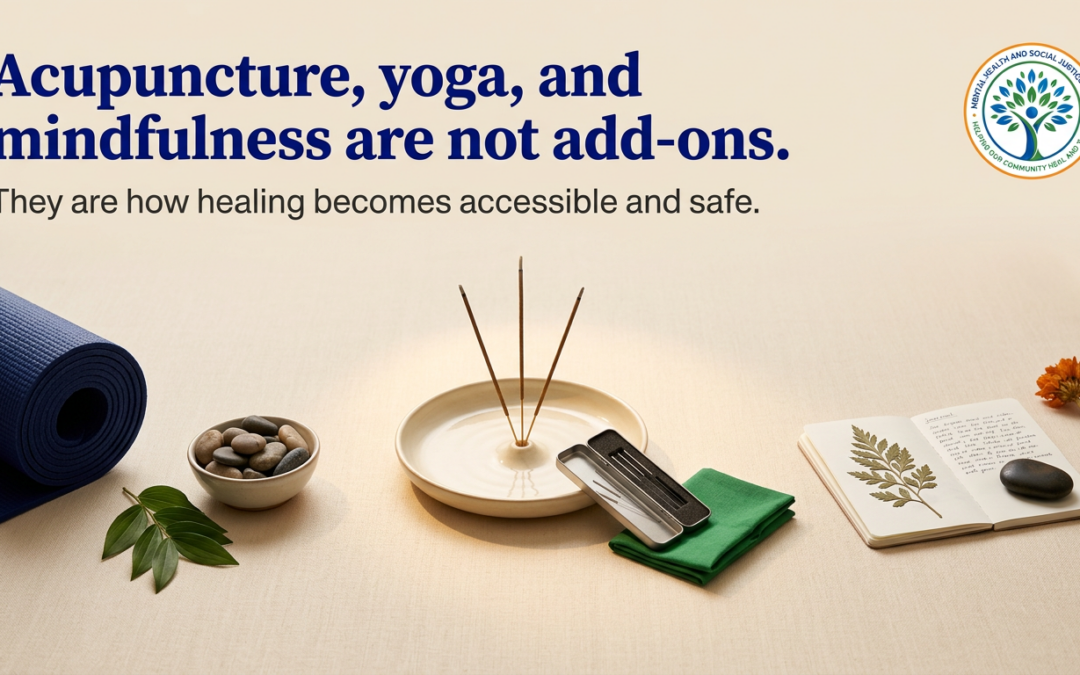
Many still see acupuncture, yoga, and mindfulness as extras in healing. That view falls short when layered trauma lives in both body and mind. At MHSJC, these therapies form the backbone of safer, accessible group healing designed for people shut out of standard care. Keep reading to learn how trauma-informed care and somatic therapy create real paths to recovery and belonging for marginalized communities. Learn more about our approach.
Holistic Therapies as Essential Tools
The healing journey is often misunderstood. Many believe holistic therapies are just add-ons. This belief overlooks their true power in community healing.
Breaking the Misconception
Imagine thinking of acupuncture, yoga, and mindfulness as mere extras. This common belief misses how these practices help trauma-affected communities. They’re not just for relaxation. They’re tools for real healing and safety.
When trauma lives in both body and mind, you need a comprehensive approach. Talk therapy alone can feel limiting. But when combined with somatic therapies, healing becomes tangible. These methods help regulate the nervous system. They allow trauma survivors to feel safer and more grounded. The Crossroads Acupuncture program also highlights the crucial role these therapies play in resilience.
Community Healing Through Integration
Integrating these practices into group sessions changes everything. Picture a space where emotional support meets physical healing. It’s not just about talking. It’s about feeling and experiencing relief in your body. This is where acupuncture, yoga, and mindfulness shine.
When these therapies come together, they create a supportive network. They make healing accessible to everyone, especially those shut out of conventional care. This integration fosters a sense of belonging and safety. It’s a community coming together to heal.
The Power of Somatic Therapies
Healing isn’t one-size-fits-all. Each therapy offers unique benefits that contribute to overall well-being. Let’s explore how these therapies support trauma recovery.
Acupuncture for Trauma Relief
Acupuncture might seem mysterious to some. Yet, it’s a powerful tool for trauma relief. Needles placed at specific points help release tension. They promote relaxation and pain relief.
Consider how acupuncture aids those carrying deep emotional wounds. For someone struggling with anxiety, acupuncture helps calm the mind. It addresses both physical and emotional pain. This makes it an essential part of holistic mental health care in South Africa.
Yoga for Mental Health Support
Yoga isn’t just about flexibility. It’s a path to mental balance. Deep breathing and mindful movement work wonders for the mind. They ease stress and promote calmness.
Yoga offers a safe space to explore emotions. For many, it’s a refuge from overwhelming thoughts. It helps build a connection between mind and body. This connection is crucial for those on a healing journey. When you feel in control of your body, your mind follows.
Mindfulness for Healing and Safety
Mindfulness keeps you anchored in the present. It teaches you to observe your thoughts without judgment. This awareness is vital for healing trauma.
Practicing mindfulness helps you feel safe in your own skin. It reduces anxiety and boosts emotional resilience. It’s a practice that transforms the way you interact with the world. Mindfulness is not just a practice; it’s a way of life that empowers you to heal.
Creating Accessible Group Healing
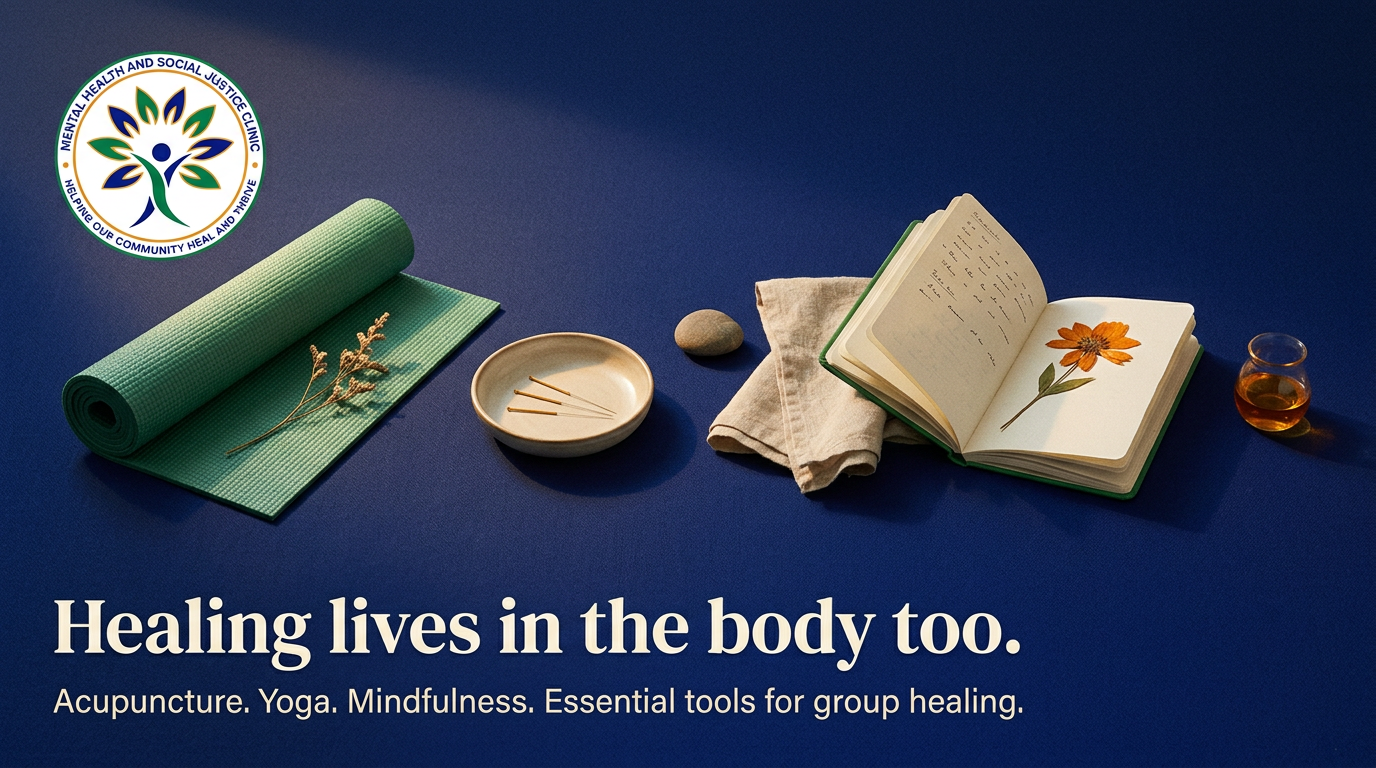
Accessibility is key in healing. Group sessions must be inclusive and supportive. This is where trauma-informed care comes in.
Trauma-Informed Group Facilitation
Facilitating trauma-informed groups requires sensitivity. It’s about creating a space where everyone feels seen and heard. This approach acknowledges the impact of trauma and adapts to individual needs. Each session is a step towards safety and trust.
By focusing on trauma recovery support, group therapy becomes more than just a meeting. It becomes a community, a place where healing is shared.
Culturally Responsive Care in Practice
Culturally responsive care recognizes and respects diversity. It’s about understanding different backgrounds and experiences. This approach ensures that healing practices resonate personally with each individual.
By incorporating cultural elements, therapy becomes more relatable. It acknowledges the unique challenges faced by marginalized communities. This leads to more effective healing, as people feel understood and valued.
Urgent Call for Community Engagement 🔥
The need for community involvement is urgent. Healing requires participation. It’s not something that happens in isolation. Our community workshops offer a chance to engage with expert-led healing.
These sessions are more than just classes. They’re opportunities to transform. To step into a supportive space designed with your needs in mind. The longer you wait, the more you miss out on real, accessible healing.
Embrace the opportunity to be part of a healing community. Discover the difference that somatic therapies can make in your life. Join us and become part of this transformative journey.