
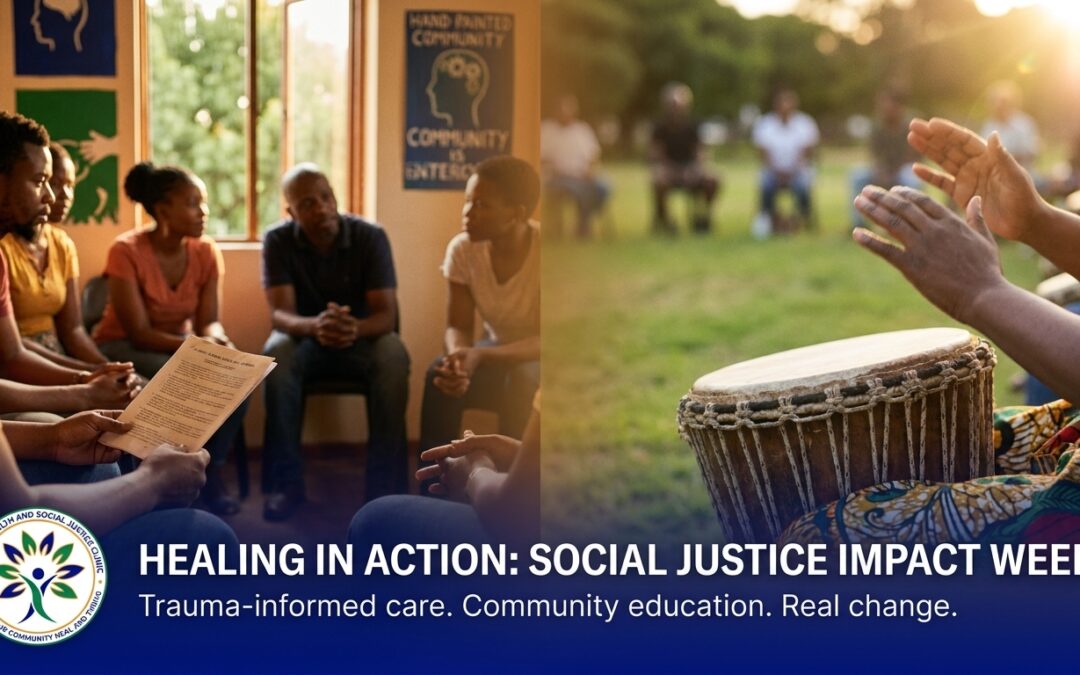
Healing in marginalized communities demands more than therapy alone. Trauma often springs from the same systems that block access to care, safety, and dignity. That’s why trauma-informed care South Africa combines mental health support with social justice education and outreach, making healing visible in everyday life. When you join Social Justice Impact Week, you’ll see how this approach helps communities heal, advocate, and build lasting change. Learn more about our approach here.
Healing Beyond the Therapy Room
Trauma-Informed Care in Action
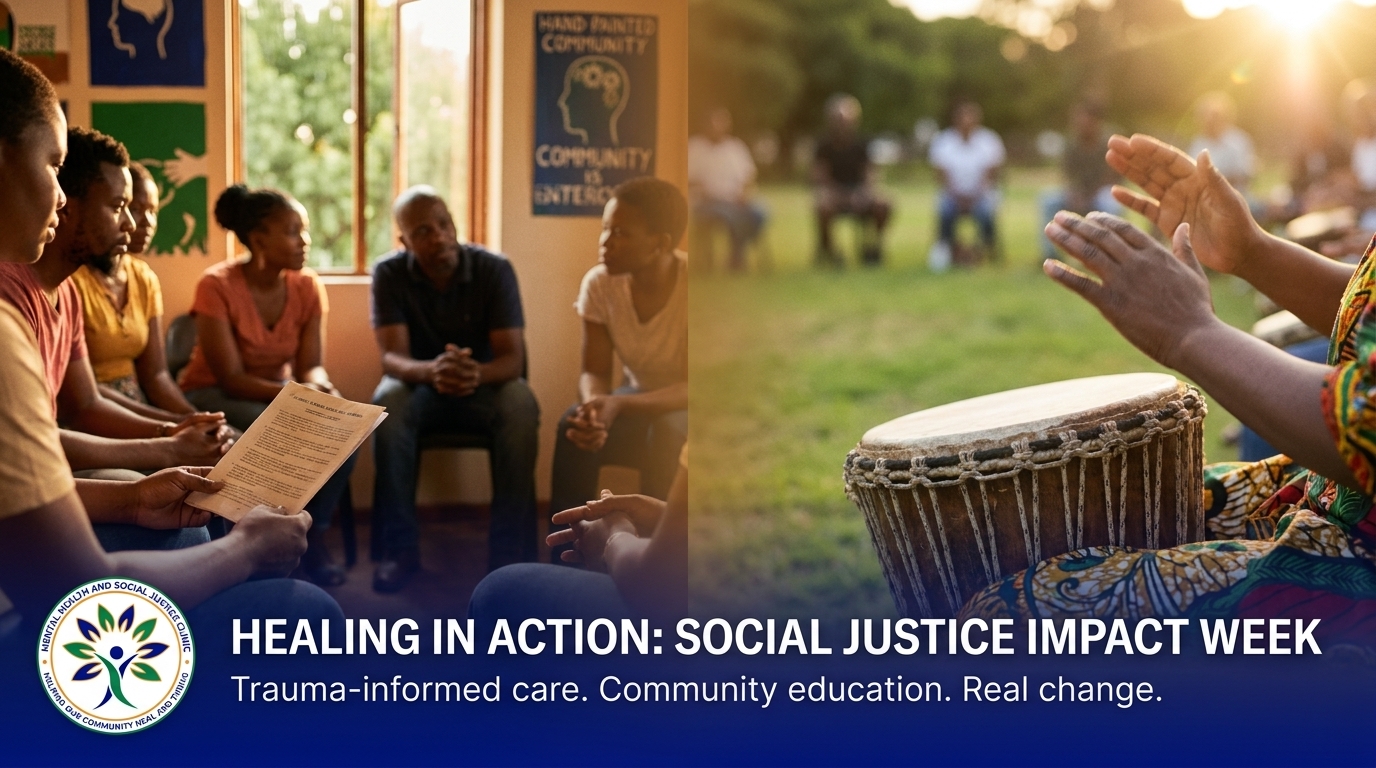
Imagine walking into a space where your story is heard and honored. That’s the essence of trauma-informed care. It acknowledges the deep wounds that systemic injustices inflict and offers a path to healing that feels personal and profound. Trauma-informed care in South Africa helps you understand the roots of trauma, offering guidance on how to heal and advocate for yourself and others.
These programs don’t just focus on the individual but extend into the community. By pairing mental health support with social justice education, the Mental Health and Social Justice Clinic creates a ripple effect of change. When you engage with this approach, you become part of a movement that challenges the status quo and fosters hope.
Legal Literacy and Healing Workshops
Legal literacy workshops work hand in hand with healing. They help you understand your rights, breaking down barriers that often seem insurmountable. These workshops offer practical tools and knowledge, empowering you to navigate systems that may have felt closed off before.
In these sessions, you’ll learn to advocate for yourself and others, gaining insights into the legal world that can help dismantle stigma and isolation. It’s not just about knowing the law; it’s about using that knowledge to build a life where you feel safe and valued. When you participate, you contribute to a culture of empowerment, creating a community where everyone has a voice.
Art Therapy and Mindfulness Practices
Art therapy and mindfulness are powerful allies in healing. Through creative expression, you can explore emotions and experiences that words may fail to capture. Art becomes a bridge to understanding, offering a safe space to process trauma.
Mindfulness practices, like deep breathing and meditation, ground you in the present moment. These techniques teach you to handle stress and anxiety, promoting a sense of peace and stability. Together, art and mindfulness offer a holistic approach to healing, allowing you to reconnect with yourself and your community in meaningful ways.
Community Outreach and Social Justice
Barriers to Access and Overcoming Them
Access to mental health care shouldn’t be a luxury. Yet, many face barriers that make help seem out of reach. Financial constraints, stigma, and geographical limitations are just a few obstacles that need addressing. The Mental Health and Social Justice Clinic works tirelessly to remove these barriers, making care accessible for all, especially marginalized communities in South Africa.
Innovative outreach programs bring services into the heart of communities. These initiatives ensure that healing is available to everyone, right where they live. By tackling these barriers head-on, the clinic opens doors to individuals who might otherwise be left behind.
Empowering Marginalized Communities
Empowerment is at the core of community outreach. True change happens when communities are equipped with the tools and knowledge to advocate for themselves. Programs focused on empowerment help individuals step into their power, transforming from passive recipients of care to active agents of change.
You’ll find that these initiatives go beyond therapy, integrating education and activism. They provide a platform for voices often silenced, encouraging you to speak up and take action. When communities unite around shared goals, they create a force that drives systemic change, making a lasting impact.
The Role of Employee Assistance Programs
Employee Assistance Programs (EAPs) play a crucial role in supporting mental health. They offer resources and counseling to employees, ensuring that wellbeing is prioritized in the workplace. These programs are vital, especially for those who might not seek help otherwise.
By partnering with organizations, the Mental Health and Social Justice Clinic extends its reach, bringing trauma-informed care into the professional realm. EAPs promote a culture of care, where mental health is recognized as essential to personal and professional success. When companies invest in these programs, they invest in a healthier, more resilient workforce.
Engage, Support, and Transform
Workshops and Limited Seats
Opportunities for growth are within reach, but they won’t last long. Workshops designed to transform your understanding of mental health and social justice are available, but seats are limited. Engaging in these sessions provides a unique chance to learn, connect, and evolve.
Don’t miss out on the opportunity to be part of something bigger. These workshops offer insights that can change your perspective and empower you to take meaningful action in your community.
Sponsoring Community Participation
Your support can make a significant difference. Sponsoring community participation in workshops and programs opens doors for those who might not have the means to attend. It’s a chance to give back and ensure that healing and empowerment are accessible to all.
By contributing, you’re not just helping an individual; you’re strengthening entire communities. Your support fosters a culture of inclusivity and growth, paving the way for lasting change.
Dr. Anissa McNeil’s Call to Action
Dr. Anissa McNeil invites you to join this movement. As a leader in trauma-informed care, she emphasizes the importance of community involvement in driving real change. It’s a call to action that resonates with urgency and hope.
Engage with the initiatives, support the mission, and witness the transformation of communities firsthand. Your involvement is crucial in making healing more than a possibility; it’s a reality. Participate, advocate, and be part of the solution. Together, we can create a future where healing and social justice go hand in hand.